Showing posts with label the church of Jesus Christ of Latte-day Saints. Show all posts

Trust the Lord! Not Singular Statements Not Substantiated by God's Quorums of Prophets- President Dallin H ...

In the first session of General Conference, October 2019, President Dallin H. Oaks of the First Presidency of The Church of Jesus Christ of Latter-day Saints counseled the Saints about putting too much stock in the visions and words of those who are not official spokespersons for the Lord or in the opinion of one perspective of a prophet in a singular statement.

Doctrine is established by the Quorums of the First Presidency and of the Twelve Apostle of the Church. That is how to know it is official Church doctrine. Anything else is an opinion that is not official.

It does not mean the teaching or view may be false, but it should NOT be taught in church as anything more than an opinion until God reveals it to His Quorums as His established words.

Surely, the Lord God doeth nothing save He reveal His secrets unto His servants the prophets [Paraphrase of Amos 3:7].

Phoenix Arizona Temple: Another Saint Haven!


Rodric29 profile image
Rodric Johnson
Rodric has been a Mormon Christian since he was 15 years old. He has a lot to say about his religion.

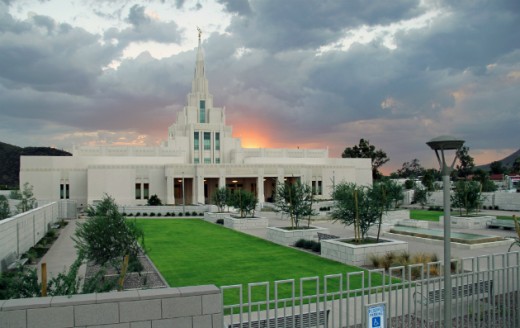
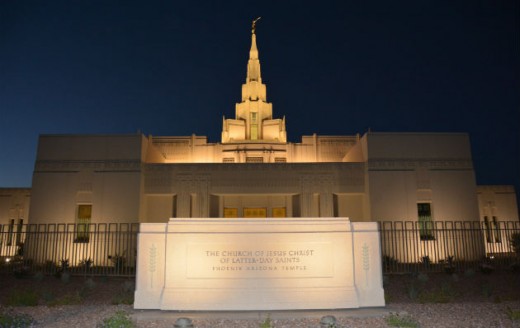
The Phoenix Arizona Temple brings with it beauty and serenity where meditation and contemplation are welcomed upon its grounds, which are meticulously kept and pleasant to behold.

In the Phoenix community, The Church of Jesus Christ of Latter-day Saints opened a temple to the public and dedicated it now only allowing members of the church in good standing. Announced May 24, 2008. the Phoenix Temple is the fifth operating temple in the state of Arizona completed.
Source
Source
Source
Source
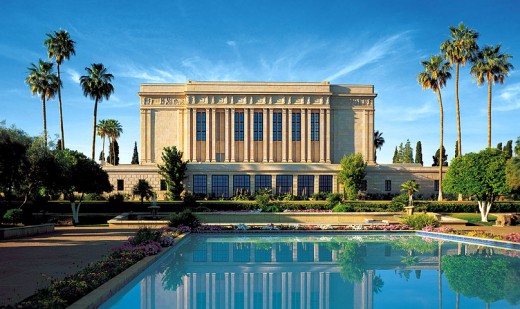
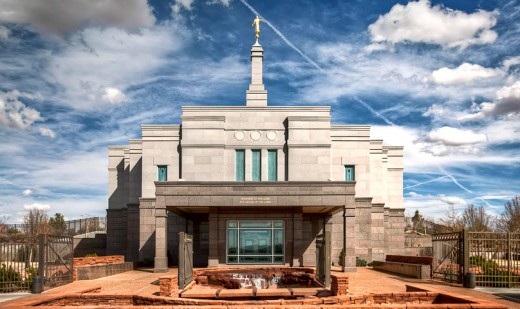
Originally the Mesa and Snowflake temples were the only operating temples in the state until the Gila Valley and Gilbert Temples were constructed.
The Tuscan Temple is the next edifice planned for the state of Arizona making in total six temples planned or completed for Arizona.
November 16, 2014 was the day the temple was dedicated for its intended spiritual purposes. Prior to that day the youth of the new temple district performed in a gala celebrating the heritages of the future patrons of the area.
To citizens of Phoenix, the Phoenix Arizona Temple brings with it beauty and serenity where meditation and contemplation are welcomed upon its grounds, which are meticulously kept and pleasant to behold.
The pools located in the front of the temple provide a soothing water flow which signifies life, vitality, and continuity as the waters gently glide over the pool walls and into the smooth stones below.
To devout Mormon Christians, the edifice signifies their commitment to Jesus Christ and His teachings about the Eternal nature of humans and their divine connections with Deity. The completion of the Phoenix Arizona Temple brings with it blessings akin to those bestowed upon Jerusalem by the building of Solomon's Temple.
The Lord has now a Holy House in the City of Phoenix permanently establishing a presence here of the higher ordinances of The Church of Jesus Christ of Latter-day Saints such as marriage for the living and posthumous vicarious marriage for ancestors.
It represents holiness to the Lord welcoming the mark of an especial House of God that stands apart from the multitude of religious houses of worship dotting the Metropolitan Phoenix area.
Source

Mormon Christians really believe ALL can receive the Gospel of Christ!

The sacred ordinances are what constitutes what Malachi records that Elijah "shall turn the heart of the fathers to the children, and the heart of the children to their fathers, lest I come and smite the earth with a curse," Malachi 4:5-6 as recorded in the Holy Bible.
To faithful members of The Church of Jesus Christ, the temple provides a connection to their ancestors. Members of the church believe that within the temple they can connect to past relatives through ordinances such as sealing or connecting each generation from the present back to Adam and Eve in an unbroken genealogical chain of Christianity.
Mormons believe that it is the responsibility of each person to make sure that deceased ancestors have the opportunity to received the saving ordinances of the gospel such as baptism.
The temples are specifically designed to complete ordinances for the dead--vicariously. With the supreme example of Jesus Christ who performed the vicarious ordinance for all the living and the dead by suffering for the sins of all people, the Atonement, the LDS Christians believe that God commands them to make sure each individual person receives the ordinances of the gospel while in this life or in the next life through a living host.
For to this end Christ both died, and rose, and revived, that he might be Lord both of the dead and livingRomans 14:9;


The Phoenix Arizona Temple is beautiful yet small compared to others in the state.
Though its size is diminished in comparison to some of the other edifices of The Church of Jesus Christ of Latter-day Saints, it serves the same in purpose and versatility to function for the living and the dead as stated by President Thomas Monson of the First Presidency of the Church in the dedicatory prayer:
Now, our Beloved Father, acting in the authority of the Holy Priesthood which comes from Thee, and in the name of Thy Beloved Son, our Lord Jesus Christ, we dedicate this, the Phoenix Arizona Temple of The Church of Jesus Christ of Latter-day Saints, as Thy house and the house of Thy Son. We dedicate it for the administering of those ordinances and covenants which are eternal and everlasting. We dedicate it for the performing of sacred service for both the living and the dead.
To LDS Christians, the temple points them to Christ as they perform for themselves and others ordinances now available in the Phoenix area for the faithful. Now Phoenician Saints do not need to leave their beloved city to do the work they so love in the temple. To the world and the city of Phoenix, the temple represents a symbol of the Lord's divine protection as long as Christians and the faithful follow God's teachings faithfully.
Source

Token of Faith

Temples worship is the pillar of LDS Christian worship, the pinnacle of faith within that community. Just as in ancient times among the chosen people of God the House of Israel, God requires a covenant people. In the temple is where the modern day person of God makes those covenants in the name of Jesus Christ.
As a symbol of their faith and covenant, the Jewish men received circumcision of the foreskin as a personal and intimate reminder of their sacred duty to Jehovah. Today, as a toke of their faith to Christ and a physical representation of their faith, LDS Christians wear a sacred garment as a reminder of their covenant to God.

The Truth About Mormon Garments!


The Video to the right provides information about the garment and its purpose. All LDS Christians who prepare themselves through righteous living receive ordinances that lead them to take the garment on as a means to further remind them of their commitment to Jesus Christ and His teachings.
Now, in Phoenix, LDS Christians can make covenants to live the law of Christ to love all people and do kind to all people. Such covenants can only improve the climate of the City!
Source

The Church of Jesus Christ has temples in many parts of the world on every continent. It has over 15 million members and performs many humanitarian missions. Chances are that a Mormon lives near or works with you!
Ask a member of The Church of Jesus Christ of Latter-day Saints about the temple. He or she will be happy to tell you about it. You can also click on THIS LINK to find out information from the official website of the church about temples or talk to a missionary.

The Spy King Zeniff

Zeniff, a Nephite soldier, disobeyed orders from his commander to destroy their enemy the Lamanites to begin a spiritual history and heritage lasting for centuries. Zeniff's actions facilitated the rise of Mosaic Christianity among the ancient Americans decades before the birth of Jesus Christ.
A small army of spies/operatives/colonists deployed from Zarahemla, the capital city of the Nephite government employed to gain intelligence on the Lamanite confederacy--how to destroy it. The Book of Mormon: Another Testament of Jesus Christ chronicles the lives of key historical figures who helped to bring the culture, religion, and historical records of their society into existence. Zeniff's decisions provided the cultural context from which great men rose to power and shaped Nephite society.  
Zeniff received orders from his unnamed commanding officer to find weaknesses in Lamanite society to destroy them; however, after living among them, he and like-minded operatives decided there remained hope to reclaim the Lamanites who had rejected the Gospel due to incorrect information given to them from the foundations of their societies hundreds of years before. These spies/colonists did not want to act in a way to destroy their brethren, but to reclaim them.  Zeniff, by way of conscience, refused to hurt the Lamanites; and with a large number of supporters fought a battle with his leader and the rest of the colonists seeking to rid the Nephites of the Lamanite problem. Zeniff's revolted against his commander!
In his brief entry in the gold record of Nephi that is now The Book of Mormon, Amaleki accused Zeniff's leader of being obstinate. "There was a large number [of Nephites, who were the spies] who were desirous to possess the land of their [first] inheritance. Wherefore, they went up into the wilderness. And their leader being a strong and mighty man, and a stiffnecked man, wherefore he caused a contention among them; and they were all slain, save fifty, in the wilderness, and they returned again to the land of Zarahemla." (Omni 1:27-28)
He did not actively solicit followers, but Zeniff did not relent and submit to the command of his leader when told to act to harm their political rivals, an extermination order, in order to possess the lands. Zeniff and his followers prevailed in the battle and returned to Zarahemla to relate the tale to the citizens--especially the families of the dead colonists. Zeniff wanted "that our ruler should make a treaty with them," the Lamanites (Mosiah 9:2). The unnamed leader declined, "he being an austere and a blood-thirsty man commanded that I should be slain," (Mosiah 9:2) and the aforementioned battle commenced.

Zeniff's Faith 

After his report, Zeniff and his group of 49 recruited others to return to the Land of Nephi, as they called it, to inherit that land and possess it, as it once belonged to the Nephites who lost it through internal strife, apostasy, intrigue, and war to the Lamanites. He established an oasis kingdom of Nephites among their centuries-old enemies the Lamanites. 

Zeniff refers to himself as a zealous person in attempting to regain his claim to the lands of his inheritance. His desire to obtain title to lands the Nephites abandoned in flight from the Lamanites led Zeniff to make a rash action, petitioning King Laman to obtain the land of Nephi as an inheritance. 
Zeniff willingly admits his fault, a level of humility beyond the stubborn epitaph suggested in the record about this stiffnecked ruler attempting to murder him on his first journey. Zeniff admitted he contended with team members about the possibility of entering into a treaty with the Lamanites because he had a change of heart about destroying them by noticing their humanity. 

God favored Zeniff because of a blessing placed upon the Lamanites by their ancestor, Lehi. In his last act as Patriarch of his united family, Lehi pronounced blessings on all of his posterity and warnings, declaring that "inasmuch as ye shall keep [God's] commandments ye shall prosper in the land; and inasmuch as ye will not keep [God's] commandments ye shall be cut off from [God's] presence" (2 Nephi 4:4). God's presence, as described in the reference, includes His protection, among other things, from ANY type of extermination and still holds valid upon the Americas.

Lehi informed them, "I know that if ye are brought up in the way ye should go ye will not depart from it. Wherefore, if ye are cursed, behold, I leave my blessing upon you, that the cursing may be taken from you and be answered upon the heads of your parents. ...because of my blessing the Lord God will not suffer that ye shall perish; ...he will be merciful unto you and unto your seed forever," 2 Nephi 4: 5-7. 

The Lamanites would not be utterly destroyed if they did not keep the commandments but continue on and receive blessings and sorrow at the hand of Gentiles who would appear after the Nephites' destruction. God would not have allowed the Nephites' preemptive strike against the Lamanites to prevail on the merit of Lehi's blessing to the children of his sons Laman and Lemuel which extended to their posterity.


Zeniff was a man of God, and it was the Spirit of God that drove him to speak up in defiance of his commanding officer to avoid destroying the Lamanites. It was probably the only time in Nephite history that the Nephites could have had the advantage to bring the Lamanite nation to an end. 
All Hail King Zeniff

Because the founding father, Nephi, laid the foundation of a city and a temple in the city of Nephi, Zeniff boldly requested the lands from King Laman. Laman provided graciously the lands of Lehi-Nephi and Shilom to the eager settlers, which included cities both with respective names as the lands. The Lamanites who inhabited those areas vacated peaceably to allow the return of the descendants of the original owners. Lehi-Nephi may have been the place of the temple Nephi constructed similarly to Solomon's temple 400 years earlier, but there is no indication from the records that this is the case. The City of Nephi (presumably Lehi- Nephi) became the seat of the new monarch of Zeniff.

Zeniff recorded that he possessed a superior Nephite education, which included language education and a religious history. Knowledge of the Land of Nephi gave him power to negotiate properly for inheritance with King Laman, at least for those two parts of the land, Shilom and Lehi-Nephi. Being the foremost of the group of people who accompanied him to the Land of Nephi, he became the obvious choice for leader, for a king. 


The goodwill of King Laman came with subterfuge, Zeniff related. Laman placed this group of settlers in a long con. After 12 years of living in peace and prosperity with the Nephites, Laman acted on his deception to take the possession of the Nephites. Apparently, Zeniff was under the impression that Laman wanted to enslave them. Laman sent his people to attack the outlying areas of Shilom killing citizens and stealing property. Those who could flee ahead of the carnage sought refuge in the City of Nephi where King Zeniff resided.


Zeniff rallied his people in prayer to the Lord for deliverance, which they received by repulsing the Lamanite attacks. Following this loss, King Laman abandoned his efforts to enslave the Nephites and left them in relative peace until he died 20 years later. Laman's son had designs on conquering the Nephites as he encouraged his people to oppose them. 


Espionage Saves the Day


Zeniff did not allow his experiences with Laman to go to waste. When first he went to the king he did so with trust. After 12 years when the truth of Laman's intentions fully matured, King Zeniff took measures to prepare against another surprise attack. Using the methods for which he was known, espionage, Zeniff kept tabs on the Lamanites following the first war. 

When the son of Laman began his propaganda machine against the Nephites when he ascended to the throne, Zeniff was prepared to counter. Zeniff searched the cultural heritage of the Lamanites so that he could understand their mentality as a group. After over twenty years of searching, he provided an assessment of their central philosophies to deliver to his people to motivate them to fight valiantly against their encroachment. 

The Lamanites felt wronged by the Nephites; so, King Laman planned to use his treaty with the Nephites, though a small group only, to exact revenge on them for 400 years of what he considered injustices! Mosiah 10:11-17 details the understanding of the Lamanites Zeniff provided, which has set the standard of belief about Lamanite aggression from that point forward.
Mosiah 10:11-17 Politicks of the Lamanites
Zeniff related that "the Lamanites knew nothing concerning the Lord, nor the strength of the Lord, therefore they depended upon their own strength. Yet they were a strong people, as to the strength of men. They were a wild, and ferocious, and a blood-thirsty people, believing in the tradition of their fathers, which is this—Believing that they were driven out of the land of Jerusalem because of the iniquities of their fathers, and that they were wronged in the wilderness by their brethren, and they were also wronged while crossing the sea ... that they were wronged while in the land of their first inheritance, after they had crossed the sea, and all this because that Nephi was more faithful in keeping the commandments of the Lord—therefore he was favored of the Lord, for the Lord heard his prayers and answered them, and he took the lead of their journey in the wilderness."
He provided this explanation to his people when they prepared to go to battle against the Lamanites to help them understand their enemy's motivations based on a misunderstanding, as opposed to the Nephites' motivations based on their faith in God. He continued, referring to Nephi and his brothers Laman and Lemuel. Laman and his followers felt "wroth with him [Nephi] because they understood not the dealings of the Lord; they were also wroth with him upon the waters because they hardened their hearts against the Lord. And again, they were wroth with him when they had arrived in the promised land, because they said that he had taken the ruling of the people out of their hands; and they sought to kill him." 
"And again, they were wroth with him because he departed into the wilderness as the Lord had commanded him, and took the records which were engraven on the plates of brass, for they said that he robbed them. And thus they have taught their children that they should hate them, and that they should murder them, and that they should rob and plunder them, and do all they could to destroy them; therefore they have an eternal hatred towards the children of Nephi. For this very cause has king Laman, by his cunning, and lying craftiness, and his fair promises, deceived me [Zeniff], that I have brought this my people up into this land, that they may destroy them; yea, and we have suffered these many years in the land."
Safety Before the End
Motivating his people to go against an army of people who surrounded them on all sides is what Zeniff had to do. Immersed in a deadly waiting game, the Nephites in the City of Nephi looked to God for their support instead of 400-year-old grievances to justify abuse toward their foes as the Lamanites did. The fact that the information was presented incorrectly to generations of Lamanites, who thought their interpretations were correct, meant utter destruction to this group of Saints unless they yielded to the wisdom of God, which they did.
Using his skills as a spy and his faith as a follower of Christ, Zeniff saved his people from the attacks of the Lamanites before the cold hand of death claimed him in his old age. Noah, his son, inherited the protected mini-kingdom of Nephites. The death of Zeniff ended the Messianic-Judac kingdom as Noah undid all that his father accomplished. Noah strived as zealously as his father except that King Noah reigned for the glory of his passions and desires and not the glory of God and his people.


Read These Things

Not one of them, the critics, think to call it what it purports itself to be: Another Testament of Jesus Christ! The Book of Mormon is the word of God.

There are people on the web who will endeavor to prove the ancient writings of American prophets are not fit for the world to read! They insist that the book is a work of the imagination of a young boy. When that is disproved they, the critics, insist that the young man, Joseph Smith Junior who translated the plates that became the book stole the story from a contemporary of his in age only, Spalding Manuscript fiasco.

When that is debunked they say he copied pages from the Bible and changed the names. When that is unraveled they call it inspired allegory or an extremely long proverb.

Well, it is true. The book is a wealth of truth.

It is a force for Christ and a powerful teacher of men and women who are humble and willing to KNOW God. Limit yourself with knowing about God if you reject the book. You will never know God as much as you will if you accept all of His words.

Bom_img1

And get this. There are more records filled with the word of God other than The Book of Mormon! If you haven't already read and prayed about this book, you are already behind in the Word of GOD revealed to humankind.


Click on the page list listed above on the left-hand side of the screen and find articles writing about The Book of Mormon: Another Testament of Jesus Christ. They are insightful and will help you gain a greater appreciation for the marvel that is the Plates of Mormon translated into English as the Book of Mormon : Another Testament of Jesus Christ.

The African Heritage of The Book of Mormon The obvious connection to Africa is the language.


You can call me Nothing

Reading in the Book of Mormon for one of my upcoming posts on Hubpages.com for a new article on prayer, I came across a scripture that my Bishop shared with me while in a meeting. 

The reference was in Mosiah 4. In this chapter is one of the scripture mastery verse that I was obliged to memorize on my mission in the Cape Town South Africa Mission, Mosiah 4:9-10. 


As soon as the Bishop mentioned that chapter the words "Believe in God...." popped in my head along with a rush of memories and emotions about my mission. I was surprised when the bishop moved to verses 4 and 5 instead. 

And king Benjamin again opened his mouth and began to speak unto them, saying: My friends and my brethren, my kindred and my people, I would again call your attention, that ye may hear and understand the remainder of my words which I shall speak unto you.
For behold, if the knowledge of the goodness of God at this time has awakened you to a sense of your nothingness, and your worthless and fallen state—
We had been talking about how wonderful the gospel is and how it has blessed our lives and how it is the best thing we had come across and he was not telling me to understand my own nothingness!!!!

As I thought upon it and how much God is everything in my existence because without Him I would not be here! I realized that in comparison to Him I am nothing! I am like a new infant in comparison to its parents. 


Infants are here and dependent upon their parents for all things. I am the infant dependent on God for all things until I learn how to be like Him as He promises us through our Savior Jesus Christ.


Which means that I must then remember that all of us, all people, are in  stages of development and should be willing to view each other with forgiving eyes and open hearts as we would view novices like infants. 


I am struggling along with each other person to be the best I can in life, so I should judge less and support more as do parents of infants! I love The Book of Mormon. Now go and read chapter four of Mosiah!!!


Related Articles


I step off the airplane for the first time in Salt Lake City. I feel extremely nervous. It’s my first time so far away from home. It’s actually real! I actually am an ordained minister of Christ, a missionary!

Lessons You need to Learn!

The Lord is very careful of whom he chooses as his prophets, but he gives each one the chance to prove that he can live up to the potential that is expected of all of Heavenly Father’s children.

Missionary Stories: We Felt Impressed

Cape Town. It is an exciting city. Just about anything you find in a large city you can find in and around Cape Town. As a missionary serving in that area, I was about finding souls.

Men Called Nephi

Prophets Are People

The Lord is very careful of whom he chooses as his prophets, but he gives each one the chance to prove that he can live up to the potential that is expected of all of Heavenly Father’s children. Prophets are not different from other people.
They have faults and challenges to face, sins of which to repent and sorrows to overcome. Often times we think of prophets as some extra special beings, and they are—but aren’t we all?
How, you might ask. Well it is simple. God gives us each responsibilities that He knows that we are capable to do. It is like the servants and the talents. In Matthew 25:14-29, the Lord Jesus speaks of talents given to three servants. Each one was given a different amount of talents to increase.
Now, I don’t want to focus on the story so much as the amount of talents that the servants were given. The Lord knows each of us, and he accordingly gives us the trials that will help us grow. I may be a one-talent trial person and the Lord expects me to take that one talent trial and increase it by overcoming it and showing that I am now at two talents in strength for overcoming it.
You may be a three-talent trial person who can increase it to six talents in strength,spiritual strength for overcoming it. A prophet might be five a five-talent trial person expected to increase in strength to ten for overcoming. The savior rewards those he increases with the same blessings no matter our talents.
He gives us what he knows we can deal with, and then blesses us for dealing with it. Also, it is not as if he leaves us to ourselves to deal with the trials, he comforts us throughout the experience to make sure we know that he loves us even though we may have to suffer a little to go through the trial.
Prophets are expected to suffer and overcome as all of us are expected to do. And no matter how big or small our trial of a talent is to others, they are significant to God because the power it takes to increase in faith to overcome those things are equally difficult for each individual.
We are not expected to lose everything as Job did, but we may be expected to lose a job, or a house, or a family member, but still come out righteous in the end. God will reward us no less than a prophet.

Nephis of Faith

That brings me to some prophets that had a great deal of trials by talent who increased in faith to honor God and receive a just reward. Nephi, Nephi and Nephi were great prophets. One Nephi lived above five centuries before the other. The other Nephi was the son of the second Nephi!
Number One Nephi of Faith

First Nephi of Faith

The first Nephi is one of my heroes because of the struggle he had to overcome within his immediate family in obeying the gospel and hearkening to the counsels and edicts of God. God commanded Lehi to take his family into the wilderness. Nephi was a member in this family.
Lehi explained that God commanded that he send his sons back to Jerusalem to get the genealogy of their fathers and the sacred scripture in the house of his cousin Laban. Two of his eldest sons of Lehi murmured about the commandment.
In 1 Nephi 3:7, Nephi responded to Lehi when asked to return to Jerusalem and retrieve the plates of brass “I will go and do the things which the Lord hath commanded, for I know that the Lord giveth no commandments unto the children of men, save he shall prepare a way for them that they may accomplish the thing which he commandeth them.”
Nephi is a symbol of righteousness who leads our thoughts back to Christ. We learn from him that God gives us no commands that He will not provide a way for us to complete. For example, God commanded my family to move to Arizona from Georgia.
We had no place of which to move, I had no job to support my family and a feeling in my breast to confirm the command. My wife and I prayed about it and made the journey. True to the promise of Nephi, God made a way for us to accomplish the move he commanded and he has sustained us every day since—because the trials do not stop.
Nephi number Two with Lehi his brother

Second Nephi of Trust

The second Nephi I want to mention was busy with missionary work—baptizing those who would follow Christ. IN Helaman chapter 7, Nephi is said to have went on a mission to the land northward to preach to his people there and was rejected utterly.
He then returned to his own house and lamented in prayer upon his tower over the wickedness of the people. From that tower he preached to the people and sought their repentance.
To drive home how wicked the people had become he was inspired to announce something tragic, something that put his own life in peril. Nephi, sorrowing at the evil of his day informed his listeners in Helaman 8:26-28,
Yea, even at this time ye are ripening, because of your murders and you fornication and wickedness, for everlasting destruction; yea, and except ye repent it will come unto you soon. Yea, behold it is now even at your doors; yea, go ye in unto the judgment-seat, and search; and behold, your judge is murdered, and he lieth in his blood; and he hath been murdered by his brother, who seeketh to sit in the judgment-seat. And behold, they both belong to your secret band, whose author is Gadianton and the evil one who seeketh to destroy the souls of men.
What a revelation, a real-time, play-by-play announcement of a tragic event. The great thing that happened in this case was not what Nephi said to the people but what occurred when the entire incident ended.
In Helaman 10:2, Nephi ponder what the Lord had shown him, as if he did not know those things beforehand, which he did not. Nephi teaches us that we should have faith to speak when we recognize the spirit has revealed something to us put forth to others—a wayward teen son or daughter, or families that we visit or home teach.
Because he was faithful, not only in that tower incident, but in his missionary work, in Helaman 10:6-8, the Lord declared in blessing “Behold, thou art Nephi, and I am God. Behold, I declare it unto thee in the presence of mine angels, that ye shall have power over this people, and shall smite the earth with famine, and with pestilence, and destruction, according to the wickedness of this people.
Behold, I give unto you power, that whatsoever ye shall seal on earth shall be sealed in heaven; and whatsoever ye shall loose on earth shall be loosed in heaven; and thus shall ye have power among this people. And thus, if ye shall say unto this temple it shall be rent in twain, it shall be done.”
If we have faith to act when moved by the spirit, the Lord will trust us as well as he did Nephi.
Nephi number three being ordained by Jesus

Third Nephi of Humility

The third Nephi was ordained as a prophet under the hand of his father Nephi and lived to witness the fulfillment of a prophecy revealed by the first Nephi that Jesus Christ should show himself to the Nephites after great destruction occurred.
Nephi in his own right was as great a missionary as was his father testifying to the wicked children of Lehi and exhorting them to turn to Christ and live prepared for Christ's coming.
The most important message from him is his humility. At the coming of Christ to the Temple at the city of Bountiful, though Nephi was the ordained prophet of God at his coming, he did not elevate himself above his brethren.
In 3 Nephi 11:18-21 it is written "And it came to pass that he spake unto Nephi (for Nephi was among the multitude) and he commanded him that he should come forth. And Nephi arose and went forth, and bowed himself before the Lord and did kiss his feet. And the Lord commanded him that he should arise. And he arose and stood before him. And the Lord said unto him: I give unto you power that ye shall baptize this people when I am again ascended into heaven."
What is significant about Nephi is that though he had the power given him already to act in the name of God, Jesus had to call him from among his fellow worshipers to renew his authority under the new covenant that Jesus established after resurrection.
Nephi did not presume to have privilege above any other person. The Lord made him the chief apostle among the children of Lehi, which was followed by almost 200 years of perfect harmony among the Christians on the Ancient American continent. To be powerful is good, as long as we do not exalt ourselves above our brethren.

Faith To Act

If we have the faith to open our mouths to those around us, the Lord will fill us with things to say. The men called Nephi shared a common trait—faith. All had faith to seek the Lord in prayer, faith to trust the Lord’s commands, faith to have studied God’s word and faith to act.
The blessings that each received are trust to perform the work of the Lord. Nephi went and retrieved the record from Laban at a high price. He had to take the life of a man because God commanded him to kill Laban. I have always cringed at that in the scriptures. Nephi showed us that sometimes, God requires use to do things that are hard—things that might shake us to our very moral core!
We will most likely not received a commandment to take another person’s life, but may feel prompted to change careers, serve senior’s mission, give up school for missionary work, serve in the military or sell property—something that we could only accomplish by living closely to the Lord so that we may have faith to act.
Nephi of Faith taught us is we do all we can to accomplish the designs of the Lord He will provide a way to accomplish it—even though the way might be different from what we expected. I am certain Nephi did not expect to kill Laban. I am sure of it in fact because of his reaction when the spirit promoted him in 1 Nephi 4:10.
He writes, “…I was constrained by the Spirit that I should kill Laban; but I said in my heart: Never at any time have I shed the blood of man. And I shrunk and would that I might not slay him.” Though Nephi did eventually obey the prompting he did not want to do it. He reluctantly did something because he had faith that God revealed it to him through the promptings of the Holy Spirit.
Nephi of Trust was given power over the elements for his obedience. God may not give us power or commandments to move mountains or stop the rain, but he will give us power to bring success to our stewardship. God may grant us wealth and riches because He knows that we will use them to bless our fellow beings. He may give us talent to lead nations or neighborhoods because we are willing to act when prompted.
Nephi of Humility demonstrated the humility of a true follower of Christ as he bowed at the feet of Jesus alongside other Christians without a place of honor. If we are obedient to the commands of God and show ourselves approved by walking in the path of Christ, He will reward us with responsibilities to further His work and prosper our creations and endeavors along the way.

Memory Piece: Life

Memory Piece: Life
Amazon Price: $9.83
List Price: $12.99

Can