Showing posts with label LDS Church. Show all posts

Mother


We love to read about other people if the story is compelling and interesting. I am a husband, father, and writer. I am also a member of The Church of Jesus Christ of Latter-day Saints. My faith is the cornerstone of my identity as a human and the subject of what makes me... well, me. I wrote a book about. What I did not want to put in that book I will write about from time-to-time on this blog.

Like Nephi from the Book of Mormon: Another Testament of Jesus Christ, I

think no record is complete without a history of my parents. Since my mother is the parent with whom I grew to maturity, I have the most to say about her. Mom's life is incredible! As the one-time self-professed black sheep of the family, she often recounted how unhappy her childhood seemed. Grandma, Lilly Bell, had to work, so Mother’s relatives cared for her.

Check out Moroni Saw Me Daily

Mother hardly knew her maternal side of the family in comparison to how she knew the paternal, Bazin, side. Mother’s paternal grandparents helped raised her while Grandma went off to work--her paternal grandmother Mary Liza Bazin taking the lead according to Mother in doing the raising. Mom never indicated that her grandpa, J. L. Bazin Senior, as an influence in her life.

All of Grandpa J.L. siblings seem to have a hand in Mother’s life at some point
and in some manner. Aside from Mary Liza, Aunt Pearline Bazin, who was a divorcee and whose only child she ever had died in infancy exerted parental influence. Mom told stories of how Aunt Pearl would speak horribly to her and mistreated her as a youth. She claimed not to hold a grudge against her because she knew that was the culture back then and the old folk knew no better. 
Lilly Bell Phillips Bazin

Mom told the truth because of my experiences with Aunt Pearl. She was like that to everybody! She lived to a ripe old age “cussin’” and a “fussin’” the entire time anyone was around to hear. I used to hate going over to her house, but when Grandma, Lilly Bell, was alive, she would take us over to Aunt Pearl’s home to visit. I hated it.

All of us kids, all the cousins hated it because Aunt Pearl would hog the TV and tell us kids what to do the entire time. She was not mean per se, but her personality was very abrasive. She was my Granma’s sister-in-law and apparent friend because we went to see her often. I did not know that Aunt Pearl was suffering from an illness and could not do for herself the way she could earlier in life due to disability. I do not think I would have cared as a kid had I known, though.

Getting back to Mother, she made sure that Aunt Pearl’s culture did not make it into my life from her, for which I am grateful. She could not stop it though since Aunt Pearl lived long enough to influence her great-nieces and nephews.

Mother claimed to be the blackest thing in the family referring to her skin complexion. She recalls most of her family members to have less melanin than did she. She said her maternal grandmother, Minnie Phillips, called her “Lil’ black thang.”

When Minnie became ill and could no longer rise from her sick bed, my mother told me that she exacted her revenge against the old lady. She said, “I would pat my butt and lick my tongue out at her!”

As a kid, Mom felt vindicated after her granny called her “Lil’ black thang” which teased her so. At least, Mother thought she teased her. Minnie was just as dark as Mother. Mom claims that Minnie despised her color and despised her also for being the only other dark complexioned person in the house. I impressed upon her to think back, view the situation with her adult eyes, and see if she felt the same sentiments. She reasoned that her grandmother was not being mean, but her words were still hurtful because people teased Mother about the color of her skin and her body size often.

“I woke up fightin’ and I went to school fightin’! I used to have the boys hollerin’ because they would pick fights with me and I whupped every one of they tails,” she said reminiscing.

My mother never complained that Grandma had to work away from her so much, but she did dredge up abusive stories about her paternal aunts who tormented her. She, however, viewed everything through the lenses of a fatherless child in a society that treated such people with some disdain. Because she had to depend on others for her rearing than Grandma, she did not always get all the information she needed to cope socially.
Mother, Catherine Oliver
Once, such a social encounter transpired at school. Mom related to us her introduction to womanhood.

“I started crying and cuttin’ the fool all the way home! I was so upset!

“I just knew my life was over. You see, I ain’t know that much about nothin’ during that time. And you know, they ain’t teach us about nothin'. The old folks did not talk about, you know, sex back then the way thangs is now, which is why I made sure y’all knew everything!

“Well, I walked in the house hollerin’ and carryin’ on like that. Aunt Pearl came in there and said, ‘Girl, what’s wrong with you?'"

“I told her that I was pregnant.”

“She say, ‘who the daddy and how it happen?’”

“I told her Ronnie Russel and said, “He looked up under my dress.”

“Aunt Pearl said, ‘Fool, you ain’t pregnant! You cain’t get pregnant from nobody lookin’ up no dress. Girl! Hush all that fuss! You fine.’”

Mom was able to laugh about it, but the experience was real and traumatic for her. It made her feel alone and mistreated at the time. She said that as a younger child she would hide under the house and wait for her mother to return home. The home in which she lived sat atop large brick blocks. She would hide from her relatives under the house for hours in tears “waitin’ for them yellow legs to walk by” so that she could crawl out from under the house and be with her mom.

If it did not happen, the way that Mother related it, she felt used, abused, and hurt until she ran away to New York where she met a man named George Oliver. They married and had a daughter named Diane, my oldest sister. Mom said that Uncle George, which is what I called him, beat her as if she were one of his children. She loved him though. She loved him and had another child with him, Johnny Lee Oliver who died at seven weeks old. After that traumatic ordeal, she drifted away from Uncle George and Diane.

Speaking with her about it, Mom said, “When I lost that one, I went insane. I thought I would never come back from that. I was no good to nobody for some years.”

The agony of having held her son and watched him for weeks only to see his limp body in the crib crumbled her only grasp of joy since the birth of her daughter and devastated her for years thereafter. She thought herself cursed and could never have another child again. She left George.

Uncle George wanted her to be a wife and a mother and she could or would not do it at that time. She told me that she refused to take Diane away from George and subject her to other men. I thought that was a strange statement until she explained some of the terrible things that occurred to her and her sisters at the hands of misogynistic predators. She left Uncle George and my sister and went out into the city to find herself where she eventually met my father.

Mother’s life was a whirlwind of success and failure. It was difficult for her in so many ways because of her past, but she did not ever think of giving up. I learned many lessons from my mother. She was instrumental in my desire to remain attached to The Church of Jesus Christ of Latter-day Saints.

I am a mamma’s boy of sorts. I cannot claim to be a fully-fledged mamma’s boy because of how Mother raised me after she became the principle adult in my life. Throughout my youth, before the age of nine, she was a mystery to me. I recall telling stories to her, and she would add, “I was there.”

I did not recall her being a highly active parent in my life in those years because of her vices. What I remember about my mother in those early years are the struggles she had that kept her away from Reggie and me. Those same struggles left us vulnerable to the world at large, the ugly parts of the world—the parts that I like to forget and pretend never happened.

Constantly I remind my wife that she must take care of how she speaks to our children because we never know what parts they keep within them. When my grandmother Lilly Bell was alive, my mother was not my mother. She was a woman that was the daughter of the woman I esteemed as my mother. Grandma was my mother for all meanings of the word save birthing. Grandma prepared me for bed each night with a bath and pajamas. Grandma hugged me when I feared something. Grandma protected me as best she could from the rude and cruel remarks of well-meaning adults. Grandma introduced me to the strange skinny lady called Catherine after she had been away for years in rehabilitation centers for her injuries from work to her back and other issues. When grandma introduced her to me as the eight-year-old Rodric, I saw a skinny sickly woman who had the same voice I remembered but looked alien to me.

One time, we visited with Aunt Patricia and watched a family video that she had. I remember my mother becoming indignant at the video we watched.

She said, “Who is that ugly black thang there,” referring to a very dark woman in the video. She frowned her face and laughed while insulting that woman. When the woman spoke, it floored her.

Auntie said, “Q-pie (short for cutie pie) that’s you.” We all had a good laugh that day. Mom spoke so horribly about this woman’s looks, and it turned out to be her!

In analysis, Mom used the same words that hurt her as a youth to describe someone else, who turned out to be her! Grandma Minnie called her lil’ black thang. It hurt Mom. It never left her because of the impression that it left on her. Mom used it in her own conversation about others replacing the word lil’ with ugly. I would surmise that was not the first time she did so.

Mother once and only once said a few choice words to me that I have never forgotten. Those words stung me then, and I think of how hurt I felt years later. I found myself using those same words when speaking to one of my children. A mother’s words are powerful. I hope that my words did not scar my kid, but I know if my wife were to say the same thing, the impact might be more damaging to that same kid. 

When I told my mother after years of hurt what she had said, she apologized. She never knew that I held onto her words, isolated as they indeed were, in such a manner of hurt. Though she has apologized, the damage, however, remained, and the words occasionally play in my head. It hurt so much then because I knew she spoke the truth. I learned from Mom to praise your kids often. I am so glad she did, or I might have had other hurtful phrases to remember. Yes, I purposely avoid repeating it here because it is the impact of the phrase that I want to convey and not the actual phrase. Such words if told me now, would roll off me as Scotch Gard-ed clothing and seem silly to the reader.

My mother’s voice did many things to people. It was the source of much entertainment and soulful healing. Mom was a great singer and did shows while I was a young kid. I recall her going to clubs to perform when we lived in Miami. She met her second husband in that manner, but that is a story hopefully she can relay in her own memoir. Following the end of her second marriage, she eventually gave up her aspiration to travel and sing so that she could look after Reggie and me, but that did not stop her from singing in church. If she could not put on a show for money and the world, she would put on one for the church and the Lord. She took all of the blues from her life and sang them in the gospel songs. One of my favorite songs for her to sing was Oh the Blood of Jesus. 


I love each time Mother would sing it because she came alive. In fact, she came alive every time she sang gospel music! It was her release.


As my greatest cheerleader, Mother told me my entire life that I was special and lifted me up. I owe to her my confidence. I did not know that I could not actually do all things until I grew up and had kids of my own. I thought all things were possible because Mother would not allow me to feel any other way.

After our move to Nashville, GA, from Miami she would encourage me to do well in my schooling. She told me I was smart and intelligent. She filled my head with so much conviction that I marveled when I failed a test and thought I had embarrassed her. She always lifted me up to a fault! I had a long journey down from the mountain of arrogance I built upon her encouragement. She gave it freely and often. I am so glad that she did. Growing up without a father of my own to depend on made her belief in my ability all the more important!

I cannot tell Mom’s life without infringing upon the privacy of many other family members, so I only give the highlights. Mother was a good mother, though I did not see it until I had my own kids. I appreciate all that she sacrificed for me to have the little joy in my childhood that I had. I appreciate her eternally for allowing me to follow my heart into the faith of my choosing. It is through this belief fostered by The Church of Jesus Christ of Latter-day Saints that my life changed in a way that would never have happened otherwise. Rest in Heaven, Mother.

They had been taught by their mothers, that if they did not doubt, God would deliver them. Alma 56:47


Phoenix Arizona Temple: Another Saint Haven!


Rodric29 profile image
Rodric Johnson
Rodric has been a Mormon Christian since he was 15 years old. He has a lot to say about his religion.

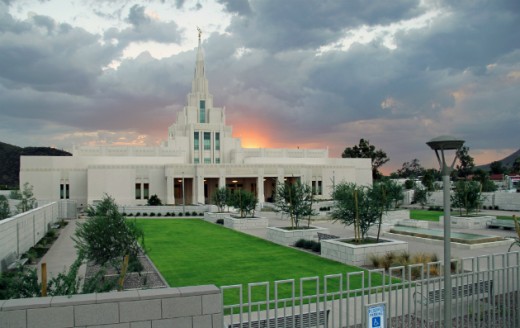
The Phoenix Arizona Temple brings with it beauty and serenity where meditation and contemplation are welcomed upon its grounds, which are meticulously kept and pleasant to behold.

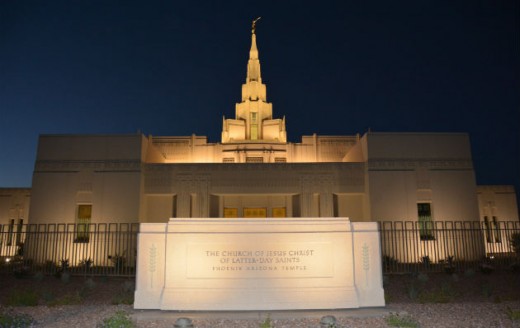
In the Phoenix community, The Church of Jesus Christ of Latter-day Saints opened a temple to the public and dedicated it now only allowing members of the church in good standing. Announced May 24, 2008. the Phoenix Temple is the fifth operating temple in the state of Arizona completed.
Source
Source
Source
Source
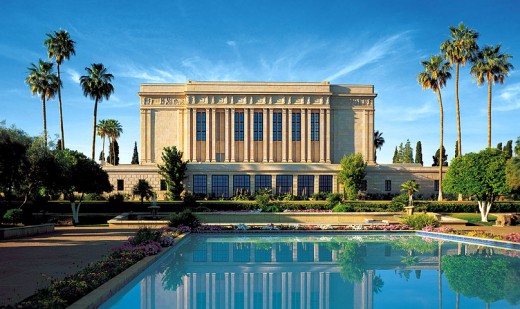
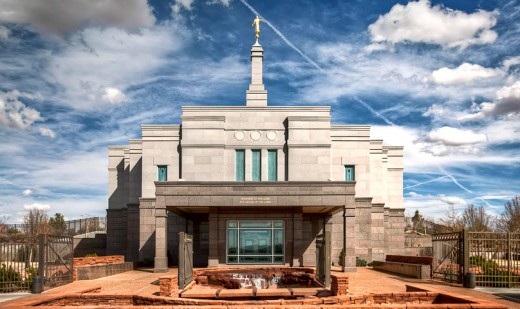
Originally the Mesa and Snowflake temples were the only operating temples in the state until the Gila Valley and Gilbert Temples were constructed.
The Tuscan Temple is the next edifice planned for the state of Arizona making in total six temples planned or completed for Arizona.
November 16, 2014 was the day the temple was dedicated for its intended spiritual purposes. Prior to that day the youth of the new temple district performed in a gala celebrating the heritages of the future patrons of the area.
To citizens of Phoenix, the Phoenix Arizona Temple brings with it beauty and serenity where meditation and contemplation are welcomed upon its grounds, which are meticulously kept and pleasant to behold.
The pools located in the front of the temple provide a soothing water flow which signifies life, vitality, and continuity as the waters gently glide over the pool walls and into the smooth stones below.
To devout Mormon Christians, the edifice signifies their commitment to Jesus Christ and His teachings about the Eternal nature of humans and their divine connections with Deity. The completion of the Phoenix Arizona Temple brings with it blessings akin to those bestowed upon Jerusalem by the building of Solomon's Temple.
The Lord has now a Holy House in the City of Phoenix permanently establishing a presence here of the higher ordinances of The Church of Jesus Christ of Latter-day Saints such as marriage for the living and posthumous vicarious marriage for ancestors.
It represents holiness to the Lord welcoming the mark of an especial House of God that stands apart from the multitude of religious houses of worship dotting the Metropolitan Phoenix area.
Source

Mormon Christians really believe ALL can receive the Gospel of Christ!

The sacred ordinances are what constitutes what Malachi records that Elijah "shall turn the heart of the fathers to the children, and the heart of the children to their fathers, lest I come and smite the earth with a curse," Malachi 4:5-6 as recorded in the Holy Bible.
To faithful members of The Church of Jesus Christ, the temple provides a connection to their ancestors. Members of the church believe that within the temple they can connect to past relatives through ordinances such as sealing or connecting each generation from the present back to Adam and Eve in an unbroken genealogical chain of Christianity.
Mormons believe that it is the responsibility of each person to make sure that deceased ancestors have the opportunity to received the saving ordinances of the gospel such as baptism.
The temples are specifically designed to complete ordinances for the dead--vicariously. With the supreme example of Jesus Christ who performed the vicarious ordinance for all the living and the dead by suffering for the sins of all people, the Atonement, the LDS Christians believe that God commands them to make sure each individual person receives the ordinances of the gospel while in this life or in the next life through a living host.
For to this end Christ both died, and rose, and revived, that he might be Lord both of the dead and livingRomans 14:9;


The Phoenix Arizona Temple is beautiful yet small compared to others in the state.
Though its size is diminished in comparison to some of the other edifices of The Church of Jesus Christ of Latter-day Saints, it serves the same in purpose and versatility to function for the living and the dead as stated by President Thomas Monson of the First Presidency of the Church in the dedicatory prayer:
Now, our Beloved Father, acting in the authority of the Holy Priesthood which comes from Thee, and in the name of Thy Beloved Son, our Lord Jesus Christ, we dedicate this, the Phoenix Arizona Temple of The Church of Jesus Christ of Latter-day Saints, as Thy house and the house of Thy Son. We dedicate it for the administering of those ordinances and covenants which are eternal and everlasting. We dedicate it for the performing of sacred service for both the living and the dead.
To LDS Christians, the temple points them to Christ as they perform for themselves and others ordinances now available in the Phoenix area for the faithful. Now Phoenician Saints do not need to leave their beloved city to do the work they so love in the temple. To the world and the city of Phoenix, the temple represents a symbol of the Lord's divine protection as long as Christians and the faithful follow God's teachings faithfully.
Source

Token of Faith

Temples worship is the pillar of LDS Christian worship, the pinnacle of faith within that community. Just as in ancient times among the chosen people of God the House of Israel, God requires a covenant people. In the temple is where the modern day person of God makes those covenants in the name of Jesus Christ.
As a symbol of their faith and covenant, the Jewish men received circumcision of the foreskin as a personal and intimate reminder of their sacred duty to Jehovah. Today, as a toke of their faith to Christ and a physical representation of their faith, LDS Christians wear a sacred garment as a reminder of their covenant to God.

The Truth About Mormon Garments!


The Video to the right provides information about the garment and its purpose. All LDS Christians who prepare themselves through righteous living receive ordinances that lead them to take the garment on as a means to further remind them of their commitment to Jesus Christ and His teachings.
Now, in Phoenix, LDS Christians can make covenants to live the law of Christ to love all people and do kind to all people. Such covenants can only improve the climate of the City!
Source

The Church of Jesus Christ has temples in many parts of the world on every continent. It has over 15 million members and performs many humanitarian missions. Chances are that a Mormon lives near or works with you!
Ask a member of The Church of Jesus Christ of Latter-day Saints about the temple. He or she will be happy to tell you about it. You can also click on THIS LINK to find out information from the official website of the church about temples or talk to a missionary.

The Spy King Zeniff

Zeniff, a Nephite soldier, disobeyed orders from his commander to destroy their enemy the Lamanites to begin a spiritual history and heritage lasting for centuries. Zeniff's actions facilitated the rise of Mosaic Christianity among the ancient Americans decades before the birth of Jesus Christ.
A small army of spies/operatives/colonists deployed from Zarahemla, the capital city of the Nephite government employed to gain intelligence on the Lamanite confederacy--how to destroy it. The Book of Mormon: Another Testament of Jesus Christ chronicles the lives of key historical figures who helped to bring the culture, religion, and historical records of their society into existence. Zeniff's decisions provided the cultural context from which great men rose to power and shaped Nephite society.  
Zeniff received orders from his unnamed commanding officer to find weaknesses in Lamanite society to destroy them; however, after living among them, he and like-minded operatives decided there remained hope to reclaim the Lamanites who had rejected the Gospel due to incorrect information given to them from the foundations of their societies hundreds of years before. These spies/colonists did not want to act in a way to destroy their brethren, but to reclaim them.  Zeniff, by way of conscience, refused to hurt the Lamanites; and with a large number of supporters fought a battle with his leader and the rest of the colonists seeking to rid the Nephites of the Lamanite problem. Zeniff's revolted against his commander!
In his brief entry in the gold record of Nephi that is now The Book of Mormon, Amaleki accused Zeniff's leader of being obstinate. "There was a large number [of Nephites, who were the spies] who were desirous to possess the land of their [first] inheritance. Wherefore, they went up into the wilderness. And their leader being a strong and mighty man, and a stiffnecked man, wherefore he caused a contention among them; and they were all slain, save fifty, in the wilderness, and they returned again to the land of Zarahemla." (Omni 1:27-28)
He did not actively solicit followers, but Zeniff did not relent and submit to the command of his leader when told to act to harm their political rivals, an extermination order, in order to possess the lands. Zeniff and his followers prevailed in the battle and returned to Zarahemla to relate the tale to the citizens--especially the families of the dead colonists. Zeniff wanted "that our ruler should make a treaty with them," the Lamanites (Mosiah 9:2). The unnamed leader declined, "he being an austere and a blood-thirsty man commanded that I should be slain," (Mosiah 9:2) and the aforementioned battle commenced.

Zeniff's Faith 

After his report, Zeniff and his group of 49 recruited others to return to the Land of Nephi, as they called it, to inherit that land and possess it, as it once belonged to the Nephites who lost it through internal strife, apostasy, intrigue, and war to the Lamanites. He established an oasis kingdom of Nephites among their centuries-old enemies the Lamanites. 

Zeniff refers to himself as a zealous person in attempting to regain his claim to the lands of his inheritance. His desire to obtain title to lands the Nephites abandoned in flight from the Lamanites led Zeniff to make a rash action, petitioning King Laman to obtain the land of Nephi as an inheritance. 
Zeniff willingly admits his fault, a level of humility beyond the stubborn epitaph suggested in the record about this stiffnecked ruler attempting to murder him on his first journey. Zeniff admitted he contended with team members about the possibility of entering into a treaty with the Lamanites because he had a change of heart about destroying them by noticing their humanity. 

God favored Zeniff because of a blessing placed upon the Lamanites by their ancestor, Lehi. In his last act as Patriarch of his united family, Lehi pronounced blessings on all of his posterity and warnings, declaring that "inasmuch as ye shall keep [God's] commandments ye shall prosper in the land; and inasmuch as ye will not keep [God's] commandments ye shall be cut off from [God's] presence" (2 Nephi 4:4). God's presence, as described in the reference, includes His protection, among other things, from ANY type of extermination and still holds valid upon the Americas.

Lehi informed them, "I know that if ye are brought up in the way ye should go ye will not depart from it. Wherefore, if ye are cursed, behold, I leave my blessing upon you, that the cursing may be taken from you and be answered upon the heads of your parents. ...because of my blessing the Lord God will not suffer that ye shall perish; ...he will be merciful unto you and unto your seed forever," 2 Nephi 4: 5-7. 

The Lamanites would not be utterly destroyed if they did not keep the commandments but continue on and receive blessings and sorrow at the hand of Gentiles who would appear after the Nephites' destruction. God would not have allowed the Nephites' preemptive strike against the Lamanites to prevail on the merit of Lehi's blessing to the children of his sons Laman and Lemuel which extended to their posterity.


Zeniff was a man of God, and it was the Spirit of God that drove him to speak up in defiance of his commanding officer to avoid destroying the Lamanites. It was probably the only time in Nephite history that the Nephites could have had the advantage to bring the Lamanite nation to an end. 
All Hail King Zeniff

Because the founding father, Nephi, laid the foundation of a city and a temple in the city of Nephi, Zeniff boldly requested the lands from King Laman. Laman provided graciously the lands of Lehi-Nephi and Shilom to the eager settlers, which included cities both with respective names as the lands. The Lamanites who inhabited those areas vacated peaceably to allow the return of the descendants of the original owners. Lehi-Nephi may have been the place of the temple Nephi constructed similarly to Solomon's temple 400 years earlier, but there is no indication from the records that this is the case. The City of Nephi (presumably Lehi- Nephi) became the seat of the new monarch of Zeniff.

Zeniff recorded that he possessed a superior Nephite education, which included language education and a religious history. Knowledge of the Land of Nephi gave him power to negotiate properly for inheritance with King Laman, at least for those two parts of the land, Shilom and Lehi-Nephi. Being the foremost of the group of people who accompanied him to the Land of Nephi, he became the obvious choice for leader, for a king. 


The goodwill of King Laman came with subterfuge, Zeniff related. Laman placed this group of settlers in a long con. After 12 years of living in peace and prosperity with the Nephites, Laman acted on his deception to take the possession of the Nephites. Apparently, Zeniff was under the impression that Laman wanted to enslave them. Laman sent his people to attack the outlying areas of Shilom killing citizens and stealing property. Those who could flee ahead of the carnage sought refuge in the City of Nephi where King Zeniff resided.


Zeniff rallied his people in prayer to the Lord for deliverance, which they received by repulsing the Lamanite attacks. Following this loss, King Laman abandoned his efforts to enslave the Nephites and left them in relative peace until he died 20 years later. Laman's son had designs on conquering the Nephites as he encouraged his people to oppose them. 


Espionage Saves the Day


Zeniff did not allow his experiences with Laman to go to waste. When first he went to the king he did so with trust. After 12 years when the truth of Laman's intentions fully matured, King Zeniff took measures to prepare against another surprise attack. Using the methods for which he was known, espionage, Zeniff kept tabs on the Lamanites following the first war. 

When the son of Laman began his propaganda machine against the Nephites when he ascended to the throne, Zeniff was prepared to counter. Zeniff searched the cultural heritage of the Lamanites so that he could understand their mentality as a group. After over twenty years of searching, he provided an assessment of their central philosophies to deliver to his people to motivate them to fight valiantly against their encroachment. 

The Lamanites felt wronged by the Nephites; so, King Laman planned to use his treaty with the Nephites, though a small group only, to exact revenge on them for 400 years of what he considered injustices! Mosiah 10:11-17 details the understanding of the Lamanites Zeniff provided, which has set the standard of belief about Lamanite aggression from that point forward.
Mosiah 10:11-17 Politicks of the Lamanites
Zeniff related that "the Lamanites knew nothing concerning the Lord, nor the strength of the Lord, therefore they depended upon their own strength. Yet they were a strong people, as to the strength of men. They were a wild, and ferocious, and a blood-thirsty people, believing in the tradition of their fathers, which is this—Believing that they were driven out of the land of Jerusalem because of the iniquities of their fathers, and that they were wronged in the wilderness by their brethren, and they were also wronged while crossing the sea ... that they were wronged while in the land of their first inheritance, after they had crossed the sea, and all this because that Nephi was more faithful in keeping the commandments of the Lord—therefore he was favored of the Lord, for the Lord heard his prayers and answered them, and he took the lead of their journey in the wilderness."
He provided this explanation to his people when they prepared to go to battle against the Lamanites to help them understand their enemy's motivations based on a misunderstanding, as opposed to the Nephites' motivations based on their faith in God. He continued, referring to Nephi and his brothers Laman and Lemuel. Laman and his followers felt "wroth with him [Nephi] because they understood not the dealings of the Lord; they were also wroth with him upon the waters because they hardened their hearts against the Lord. And again, they were wroth with him when they had arrived in the promised land, because they said that he had taken the ruling of the people out of their hands; and they sought to kill him." 
"And again, they were wroth with him because he departed into the wilderness as the Lord had commanded him, and took the records which were engraven on the plates of brass, for they said that he robbed them. And thus they have taught their children that they should hate them, and that they should murder them, and that they should rob and plunder them, and do all they could to destroy them; therefore they have an eternal hatred towards the children of Nephi. For this very cause has king Laman, by his cunning, and lying craftiness, and his fair promises, deceived me [Zeniff], that I have brought this my people up into this land, that they may destroy them; yea, and we have suffered these many years in the land."
Safety Before the End
Motivating his people to go against an army of people who surrounded them on all sides is what Zeniff had to do. Immersed in a deadly waiting game, the Nephites in the City of Nephi looked to God for their support instead of 400-year-old grievances to justify abuse toward their foes as the Lamanites did. The fact that the information was presented incorrectly to generations of Lamanites, who thought their interpretations were correct, meant utter destruction to this group of Saints unless they yielded to the wisdom of God, which they did.
Using his skills as a spy and his faith as a follower of Christ, Zeniff saved his people from the attacks of the Lamanites before the cold hand of death claimed him in his old age. Noah, his son, inherited the protected mini-kingdom of Nephites. The death of Zeniff ended the Messianic-Judac kingdom as Noah undid all that his father accomplished. Noah strived as zealously as his father except that King Noah reigned for the glory of his passions and desires and not the glory of God and his people.


Can